Zibo Jinhe Fan: How to Choose Axial Fans for Global Sourcing?
Oct 24, 2026
Anqiu, Shandong Oct 24, 2026 (Issuewire.com) - Zibo Jinhe Fan: How to Choose Axial Fans for Global Sourcing?
Choosing Axial Fans for global sourcing requires more than comparing catalog prices. The right decision connects airflow, pressure, noise, energy use, durability, and supplier reliability. A fan moving 12,000 cubic meters per hour may still fail when filters create unexpected resistance. Numbers need context.
Start with the operating environment. Record temperature, humidity, dust exposure, altitude, voltage, frequency, and available installation space. A warehouse fan faces different demands from a food-processing line or a rooftop cooling system. Check blade material, motor protection, bearing design, vibration control, and maintenance access. Small details matter.
Do not trust performance charts without test conditions. Request full curves, tolerances, test methods, motor data, and sample results. Confirm whether airflow is measured freely or against system pressure. The difference can be costly. Ask suppliers for production photos, factory quality procedures, traceable test records, and references from comparable projects. Verify certificates against the destination market and the actual model. A copied document proves little.
I once underestimated packaging requirements. Several units arrived with damaged guards after a long sea shipment. The specification was correct, but the sourcing plan was incomplete. That lesson remains useful: evaluate the entire supply chain, not only the fan. Compare landed cost, lead time, spare parts, warranty response, inspection options, and communication speed. A supplier who answers clearly before payment often performs better afterward, though this is not guaranteed. Build a practical shortlist, test representative samples, and document every assumption before placing a larger order.
Define Axial Fan Types, Components, and Operating Principles
How to Choose Axial Fans for Global Sourcing?
Axial fans move air parallel to the rotating shaft. Their main families are propeller, tubeaxial, and vaneaxial fans. Propeller fans suit open-air movement and low resistance. Tubeaxial fans use a cylindrical housing for steadier duct airflow. Vaneaxial fans add guide vanes and create higher pressure. The U.S. Department of Energy's Improving Fan System Performance sourcebook reports that fan systems may consume 15-20% of electricity in commercial buildings. Efficiency deserves attention.
A complete fan includes blades, hub, motor, bearings, shaft, housing, inlet cone, guard, and control system. Blade pitch changes airflow and power demand. The motor supplies torque, while the housing reduces leakage and turbulence. According to AMCA Publication 211, comparable fan ratings require standardized testing and published performance data. Ask for airflow, static pressure, speed, sound level, efficiency, and operating temperature. Do not compare motor wattage alone.
Fan laws explain practical selection. At constant diameter, airflow follows speed, pressure follows speed squared, and power follows speed cubed. A 10% speed increase can raise power demand by about 33%. That detail can change lifetime costs. I have seen specifications that looked complete but omitted system resistance. A spreadsheet can still lie. Check the duty point on a certified performance curve, then verify voltage, frequency, bearings, corrosion protection, and spare-part access. Imported units may fit physically yet fail local electrical requirements. That mistake is expensive.
Identify Airflow, Pressure, Noise, and Environmental Requirements
How to Choose Axial Fans for Global Sourcing?
Identify Airflow, Pressure, Noise, and Environmental Requirements
Selecting an axial fan starts with the actual airflow requirement, not the fan diameter. Calculate the required air volume from heat load, enclosure size, and acceptable temperature rise. Then estimate system resistance from grilles, filters, ducts, and bends. A fan that moves impressive free-air volume may perform poorly against real pressure.
Check the fan curve at the intended duty point. Airflow and static pressure must be evaluated together. I have seen purchasing teams compare only cubic meters per hour, then discover weak ventilation after installation. That shortcut is costly. Leave a sensible margin, but avoid excessive oversizing, which can increase energy use and turbulence.
Noise needs a practical target. Specify sound pressure level, measurement distance, operating speed, and surrounding conditions. A quiet workshop differs from a factory floor. Environmental details matter just as much. Record ambient temperature, altitude, humidity, dust, vibration, and possible chemical exposure. Salt air can accelerate corrosion. Fine dust can block guards and reduce performance. Ask for test methods, tolerances, material details, and protection ratings. Documents often look precise. They are not always complete. Recheck critical data with a sample test, because installation conditions can change the result.
How to Choose Axial Fans for Global Sourcing?
Identify airflow, pressure, noise, and environmental requirements before comparing suppliers.
AirflowMatch the required cooling volume, measured in cubic metres per hour (m³/h), at the operating point.PressureCheck static pressure in pascals (Pa) to compensate for filters, grilles, ducts, and heat exchangers.NoiseUse sound pressure in dBA at a defined distance and operating speed when selecting for occupied spaces.EnvironmentConfirm temperature range, humidity, dust protection, corrosion resistance, and ingress protection requirements.
Representative engineering requirements for common axial-fan applications. Actual selection should be verified against the fan curve, system resistance, installation position, and applicable regional safety standards.
Compare Materials, Motor Options, Controls, and Energy Efficiency
Global axial-fan sourcing should begin with the air duty, not the catalogue photograph. Define airflow, static pressure, temperature, noise, and operating hours.
A galvanized steel frame suits dry indoor service. Aluminum reduces weight. Stainless steel is safer around salt, washdown, or chemical exposure, but it raises cost.
Motor selection changes lifetime energy use. AC induction motors remain practical for rugged, lower-cost installations. EC or electronically commutated motors offer integrated speed control and efficient part-load operation. IE3 and IE4 efficiency classes provide useful comparison points, although efficiency alone does not predict total system performance.
The International Energy Agency reports that electric motor systems consume roughly half of global electricity. The European Commission's Ecodesign work places motor systems near 46% of EU electricity consumption. Small efficiency differences matter when fans run continuously.
Controls deserve equal attention. A variable-frequency drive can reduce speed during low-demand periods, while 0-10 V, PWM, Modbus, or sensorless controls simplify building integration. The U.S. Department of Energy's fan-system guidance recommends evaluating the complete system, including filters, dampers, ducts, and control settings.
A 20% speed reduction can theoretically cut fan power dramatically, but real savings depend on system resistance and control logic. The first shortlist is rarely right. A spreadsheet may hide bearing temperature, startup current, or unstable airflow. Request test curves, sound data, ingress protection, motor efficiency at several loads, and sample inspection records. Cheap materials can become expensive after one humid season.
Evaluate Suppliers, Certifications, Customization, and Global ComplianceHow to Choose Axial Fans for Global Sourcing?
Supplier evaluation should begin with measured performance, not attractive catalog images. The U.S. Department of Energy reports that motor-driven systems consume about 68% of manufacturing electricity. Fan efficiency therefore affects operating budgets significantly. Request airflow, static pressure, sound, vibration, motor efficiency, and test conditions. Check whether results follow ISO 5801 or an equivalent recognized method. Ask for sample test reports, not only brochures. Small details matter.
Certifications must match the destination market and the complete fan assembly. Review electrical safety, electromagnetic compatibility, restricted substances, and environmental requirements. CE, UKCA, UL, CSA, or other marks may apply differently by country. A certificate alone is not proof of compliance. Verify its scope, validity, issuing body, and exact model number. The European Commission's Ecodesign framework also shows why efficiency requirements should be checked before purchasing.
Customization can include impeller diameter, blade angle, motor voltage, coating, bearings, sensors, and mounting geometry. Require a controlled drawing and a change-notification process. Ask suppliers to explain production tolerances and replacement-part availability. AMCA Publication 211 emphasizes transparent fan performance certification and rating procedures. Still, paperwork can hide practical weaknesses.
A factory audit should inspect balancing equipment, end-of-line testing, packaging, and traceability. One overlooked issue is transport damage; a well-tested fan is useless if blades arrive bent. Procurement teams should document assumptions, because airflow conditions often change after installation.
Verify Samples, Total Costs, Shipping, and After-Sales Support
When sourcing axial fans globally, request a working sample before approving production. Check airflow, static pressure, noise, vibration, current, and temperature rise at the stated operating point. Use a calibrated test setup and record the impeller diameter, blade angle, motor speed, and test conditions. AMCA standards emphasize consistent fan-performance testing, but supplier data may still use different methods. Small differences can become expensive mistakes.
Look beyond the unit price. Calculate the total cost, including tooling, inspection, packaging, inland transport, customs fees, duties, installation, electricity, and replacement parts. The International Energy Agency reports that electric motor systems consume about 53% of global electricity, so motor efficiency deserves serious attention. A cheaper fan may create higher operating costs for years. I once underestimated packaging volume; the shipping quote looked attractive until the cubic-meter charge arrived. That error was avoidable.
Shipping conditions need verification. Ask for carton dimensions, gross weight, loading photos, moisture protection, and a realistic delivery window. The World Bank's 2023 Logistics Performance Index shows major differences in customs efficiency and shipment reliability across markets. Plan buffer time. Do not promise an exact date too early. After-sales support should include wiring diagrams, spare-part lists, troubleshooting procedures, and response-time commitments. Request one technical contact who can diagnose vibration or overheating remotely. Written support is better than informal promises, though it can still be slow during holidays. Keep a signed sample report and acceptance criteria for every batch.
Conclusion
Choosing Axial Fans for global sourcing requires a structured evaluation of both technical performance and supply reliability. Start by understanding the differences among propeller, tube-axial, and vane-axial designs, including their components and operating principles. Define the required airflow, static pressure, noise level, operating temperature, humidity, dust exposure, and installation conditions before comparing suitable models. Material selection, motor type, speed control, protection features, and energy efficiency should also match the application and expected service life.
A reliable sourcing process should include supplier capability, production consistency, certifications, customization options, and compliance with destination-market requirements. Before placing a large order, verify samples through performance and durability testing. Calculate total cost by considering the product price, tooling, packaging, transportation, import procedures, maintenance, and energy consumption. Clear warranty terms, spare-parts availability, technical documentation, and responsive after-sales support are equally important for reducing operational risks and ensuring long-term value.
Zibo Jinhe Fan Co., Ltd. Real-Time Data & Milestones22 Years of Industrial Fan Excellence
From a dedicated regional manufacturer to a nationally trusted brand -- our milestones reflect decades of engineering commitment.
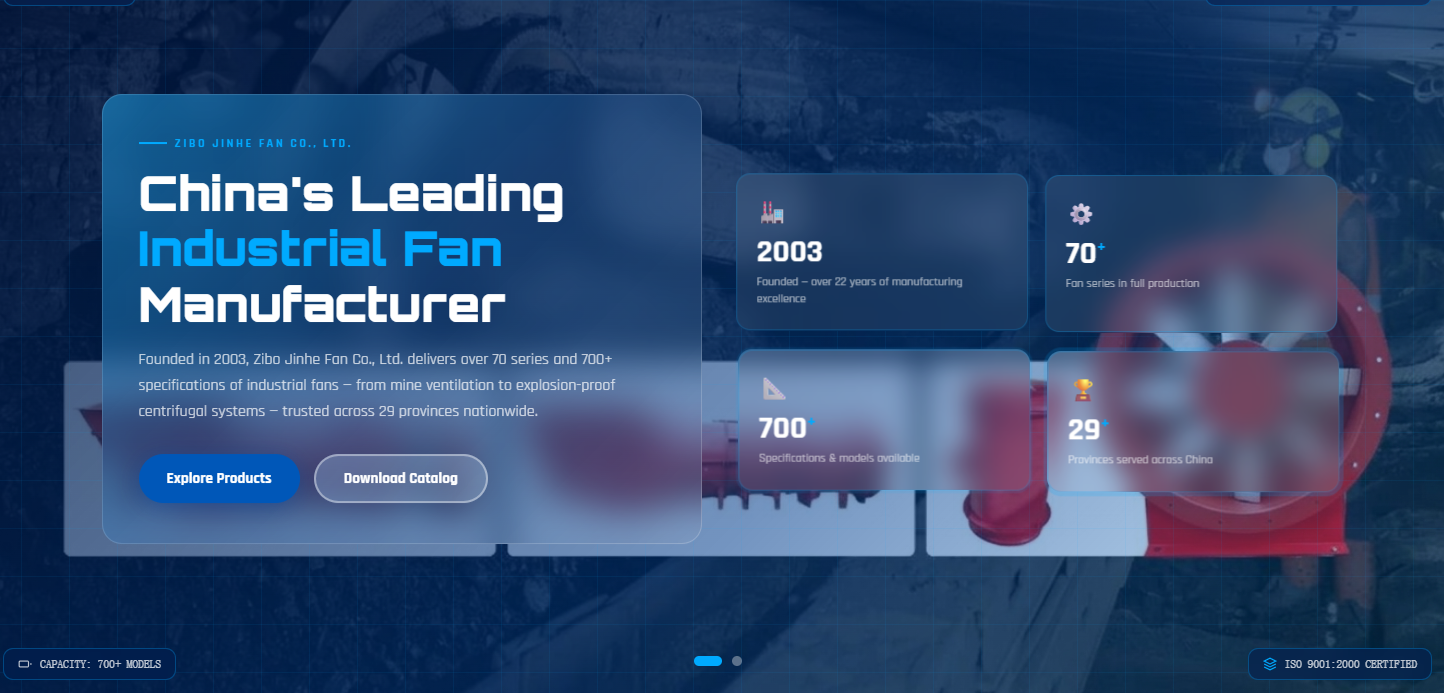
22+Years in operation since founding in 2003
70+Fan series in full production
700+Specifications & models available
10+Certifications, licenses & safety marks-- A National Leader in Fan Manufacturing
Zibo Jinhe Fan Co., Ltd. is located in Nanjiao Town, Zhoucun District, Zibo City, Shandong Province. It is conveniently located near major transportation routes: the Bingcheng Expressway to the east, the Jinan-Qingdao Expressway to the west, National Highway 309 to the south, and the Jiaozhou-Jinan Railway to the north.
This strategic location ensures efficient logistics and reliable supply chain management for clients across China and international markets. Our proximity to major transport arteries means shorter lead times and more dependable delivery schedules.
As a nationally recognized medium-sized enterprise, Jinhe Fan has built its reputation on decades of engineering precision, rigorous quality control, and a relentless commitment to technological innovation in industrial ventilation.
See Jinhe Fan in Action
Take a virtual tour of our state-of-the-art manufacturing facilities and witness the precision engineering behind every Jinhe industrial fan.
Zibo Jinhe -- Two Decades of Fan Engineering Innovation
Founded in 2003, the company has developed into a nationally recognized medium-sized enterprise through years of dedicated efforts, producing more than 700 specifications and models in more than 70 series of fans.
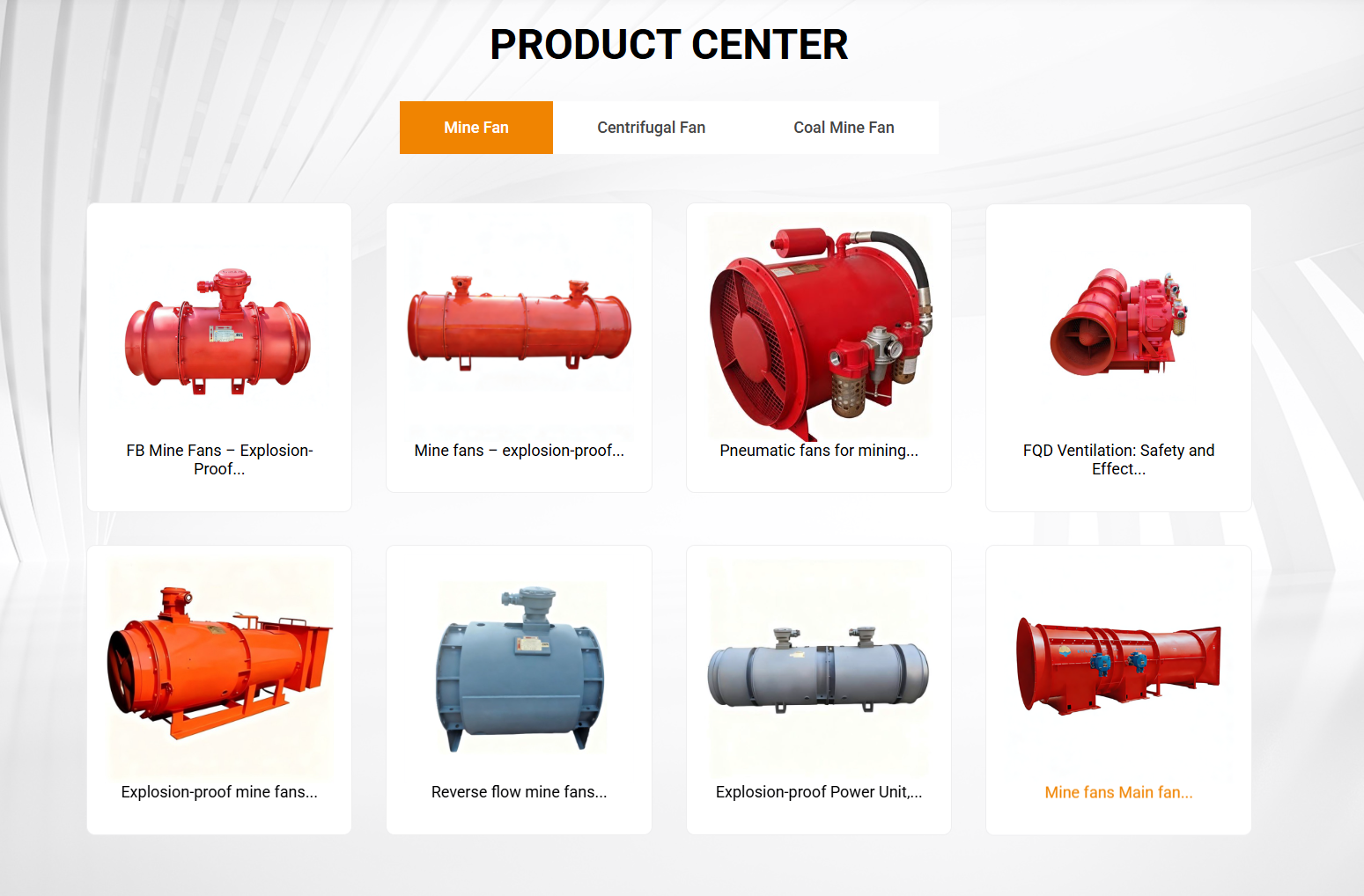
Our products are widely used in forced ventilation and exhaust ventilation of boilers; forced ventilation, exhaust ventilation and dust removal in large power plants, cement plants, coke plants and steel plants; axial ventilation in textile industry; explosion-proof ventilation in chemical plants; gas positive pressure ventilation; industrial furnace ventilation; main, auxiliary and local fans in mines for metallurgy, non-ferrous metals, gold, building materials and nuclear industries; tunnel ventilation; cooling ventilation; coal mine main fans, local exhaust fans, wet dust collection fans in mining, pneumatic axial fans, explosion-proof centrifugal fans.
All products have production licenses, assessment certificates, and MA safety marks issued by the Ministry of Machinery Industry, the Ministry of Coal, and the China Coal Research Institute. Our K and DK series energy-saving mining fans have received awards such as the Silver Award from the National Spark Program, the Second Prize for Scientific and Technological Progress from the Ministry of Metallurgical Industry, and the First Prize for Provincial Scientific and Technological Achievement.
2000 -- ISO 9002 Certification
Obtained ISO 9002 international quality system certification, establishing foundational quality standards.
2003 -- Company Founded
Zibo Jinhe Fan Co., Ltd. established in Zhoucun District, Shandong Province.
2007 -- ISO 9001:2000 Upgrade
Upgraded to ISO 9001:2000 certification, reinforcing our world-class quality assurance system.
Present -- 700+ Models, 29 Provinces
Recognized as a key production base by the Ministry of Metallurgy and China Non-Ferrous Metals Corporation.
Our Competitive Advantages
Through internal innovation and expansion into foreign markets, the company has strengthened its competitiveness in key markets. Its strong R&D capabilities and high market standing have made a significant contribution to the development of the industry.
Technological Cooperation with Universities
For many years, the company has been implementing the policy of "Revitalizing Science and Technology", maintaining long-term technical cooperation with universities and research institutes, including Xi'an Jiaotong University, Shanghai Jiaotong University, Northeastern University, Beijing University of Science and Technology, Ma'anshan Research Institute, and the Mining Energy Conservation Promotion Station of the Ministry of Metallurgy.
Research and Development
Anticipating customer needs and responding to urgent requests, the company implements new technologies to continuously release innovative products, significantly increasing its viability and market share. This unwavering commitment to technological advancement has enabled the company to stand out among numerous small and medium-sized fan manufacturers.
World Famous Enterprise
The company is a world-famous medium-sized enterprise producing more than 70 series and more than 700 specifications and models of fan products, recognized for consistent quality and innovation.
Production License & Safety Marks
All products have production licenses, assessment certificates and MA safety marks issued by the Ministry of Machinery Industry, the Ministry of Coal and the China Coal Research Institute -- ensuring every product meets the highest safety standards.
Jinhe Fan research and development laboratory innovationAdvanced R&D Capabilities
Nationwide User Trust
Our products are sold nationwide in 29 provinces (municipalities and autonomous regions) and are trusted by a wide range of users across mining, power generation, cement, chemical, and textile industries.
Outstanding Enterprise Recognition
Currently designated as the key production base of mining fans by the Ministry of Metallurgy and China Non-Ferrous Metals Corporation. Also a member of China Fan Industry Association, a demonstration enterprise of the National Spark Program, and a provincial high-tech enterprise.
700+ Models Across 70+ Fan Series
From explosion-proof mine fans to high-efficiency centrifugal fans, our comprehensive product range covers every industrial ventilation requirement.
Mine FanCentrifugal FanCoal Mine Fan
Industrial Application Scenarios
Jinhe Fan products are engineered for demanding environments across a wide spectrum of industries -- from deep underground mines to large-scale power generation facilities.
Display Certificate
With rich technical knowledge, advanced product design, advanced production equipment and comprehensive testing capabilities, the company obtained ISO 9002 international quality system certification in 2000 and upgraded to ISO 9001:2000 certification in 2007, establishing a sound quality assurance system. Our certifications reflect our unwavering commitment to international quality standards and regulatory compliance across all product lines.
Ready to Partner with China's Leading Fan Manufacturer?
We sincerely look forward to cooperating with domestic and international enterprises and experts to achieve mutual success and common prosperity. Contact our team today to discuss your industrial ventilation requirements.
website: https://www.jinhefans.com/
contact us:
[email protected]
+86 13853306197
Source :Zibo Jinhe Fan Co., Ltd.
This article was originally published by IssueWire. Read the original article here.



YOUR NEWS, OUR NETWORK.
Do you have Great News you want to tell the world?
Be it updates about your business or your community, you can make sure that it’s heard by submitting your story to our network reaching hundreds of news sites across 6 verticals.
About Us
Daily World Web took the initiative to utilize the development in cloud and AI technology to create a free, instantaneous and borderless flow of news, the way it should be.
News